

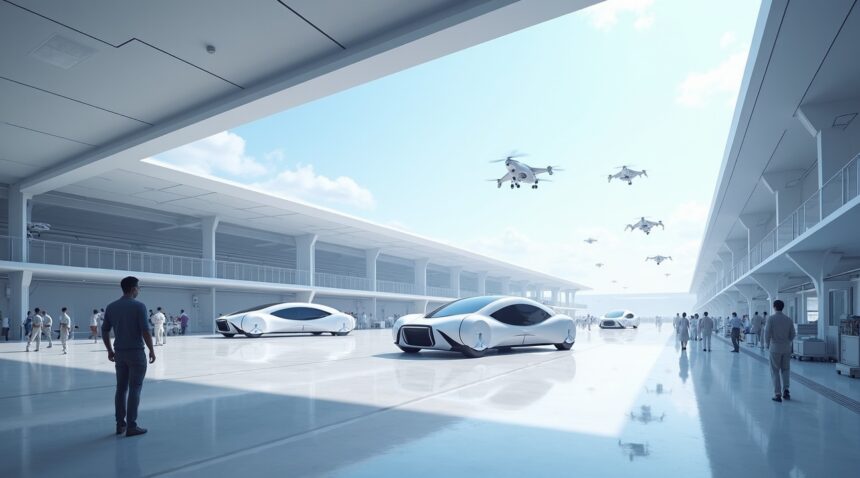
XPENG AEROHT has officially launched the world’s first mass production factory for flying cars, representing a transformative milestone in the evolution of transportation technology.
Key Highlights of the Launch
- World-first facility: China becomes the first country to establish a mass production plant solely for flying cars, leapfrogging global competitors still in development phases.
- Efficient manufacturing: The plant is designed to build a complete flying car every 30 minutes when running at full capacity, with a target of 10,000 units per year.
- Strong demand: With pre-orders between 5,000–7,000 units, demand for flying cars is already outpacing initial production capacity.
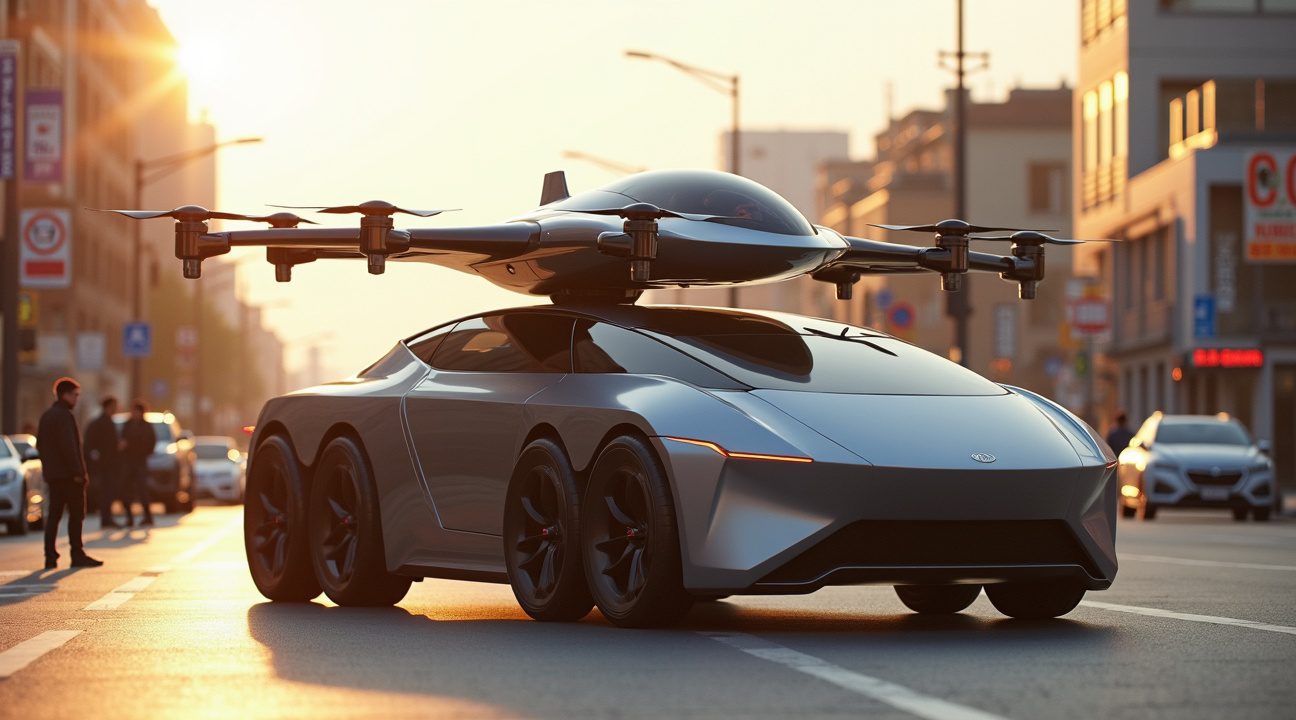
- Revolutionary vehicle design: The Land Aircraft Carrier features a six-wheeled ground vehicle coupled with a detachable eVTOL module, priced at approximately $280,000.
- Strategic support: The Chinese government has prioritized the development of a “low-altitude economy” through 2029, offering regulatory and infrastructural backing unmatched by other nations.
Implications of the XPENG AEROHT Factory Launch
The launch of this 120,000-square-meter facility in Guangzhou is far more than a milestone for XPENG AEROHT—it signals China’s assertion of leadership in the next generation of personal transportation. While competitors continue testing prototypes or navigating regulatory webs, XPENG is actively building vehicles at scale.
Blending Automotive and Aerospace Expertise
To achieve manufacturing readiness, the company has fused automation systems typical of automotive plants with the precision demanded by aerospace standards. Robotic systems manage intricate assembly tasks, contributing to high reliability and helping ensure compliance with aviation regulations.
Soaring Consumer Interest
The global market response has already overwhelmed initial projections, with over 7,000 inquiries and pre-orders for flying cars. Use cases extend beyond personal mobility to include logistics, humanitarian services, and executive transportation, validating the versatility of the Land Aircraft Carrier.
Modular Design for Maximum Utility
Unlike traditional flying car concepts tied to a single chassis, XPENG AEROHT’s Land Aircraft Carrier separates terrestrial and aerial functionalities. The ground module can be driven as a standalone vehicle, while its eVTOL component attaches only when necessary, making it a practical choice for diverse environments.
Pricing Strategy with Future Affordability In Sight
With an initial launch price around $280,000, the vehicle targets the luxury tier. However, operational efficiencies and economies of scale are expected to reduce this to below $200,000 within five years.
Government Support and Strategic Plans
Regulatory fast-tracking remains one of XPENG’s strongest advantages. With the “low-altitude economy” designated as a strategic development area, the Chinese government has streamlined certification pathways, established dedicated air corridors, and invested in key infrastructure such as electric charging stations and communication systems.
In contrast, many Western firms struggle with fragmented airspace regulations, disjointed infrastructure, and sluggish certification processes hampering swift industrialization.
Factory Expansion and Operational Standards
- Scalable design: The existing facility can double production from 5,000 to 10,000 units annually without structural upgrades.
- Advanced safety testing: Each unit undergoes rigorous aviation-grade quality control and redundant flight safety validation.
- Localized supply chains: Major component suppliers are based near the factory to minimize logistics delays and enhance oversight.
- Specialized workforce: Employees are trained across both automotive and aerospace disciplines, ensuring agile and adaptable production teams.
- Eco-conscious production: Renewable energy sourced from solar arrays and efficient waste recycling systems align the facility with sustainability goals.
Global Impact and Competitive Implications
With this move, XPENG AEROHT has dramatically altered the trajectory of the global flying car sector. As showcased in their official news release, this factory is prepared not only to meet demand but to lead the industrialization of flying vehicles globally.
This strategic leap challenges other manufacturers to expedite their innovation cycles or face irrelevance in an industry that is rapidly converting science fiction into everyday reality. Demonstrated manufacturing viability could influence policymakers, investors, and early adopters worldwide to take flying cars more seriously, paving the way for their integration into daily transportation networks.
World’s First Mass Production Flying Car Factory Opens in China
XPENG AEROHT has officially launched trial production at the world’s first intelligent manufacturing facility dedicated to mass-producing flying cars. The milestone event occurred on November 3, 2025, marking a significant leap forward in aviation technology and manufacturing capabilities.
Facility Specifications and Production Capacity
Located in Guangzhou’s Huangpu district, the groundbreaking factory spans an impressive 120,000 square meters. This expansive facility represents a major investment in the future of personal aviation transportation. The initial configuration allows for production of 5,000 detachable aircraft modules annually, though engineers have designed the factory with scalability in mind.
Production capacity can expand to accommodate 10,000 units per year as demand increases. Once the facility reaches full operational status, it will achieve remarkable efficiency by assembling one complete flying car every 30 minutes. This rapid production timeline demonstrates the advanced automation and manufacturing processes that XPENG AEROHT has implemented.
Current Trial Phase and Future Timeline
The current trial production phase focuses on three critical areas:
- Process verification
- Equipment testing
- Manufacturing prototypes required for airworthiness certification
These prototypes serve a dual purpose – they allow engineers to refine manufacturing processes while providing the necessary test vehicles for regulatory approval.
Process verification ensures that each step in the assembly line meets quality standards and safety requirements. Equipment testing validates that all machinery and automation systems function correctly under real production conditions. Manufacturing prototypes for airworthiness certification creates the test vehicles needed to obtain regulatory approval from aviation authorities.
Full-scale mass production won’t begin immediately. XPENG AEROHT has scheduled the transition to complete manufacturing operations and consumer deliveries for 2026. This timeline allows sufficient time for certification processes and any necessary adjustments to production systems based on trial phase findings.
The factory’s intelligent design incorporates advanced manufacturing technologies that promise to revolutionize how flying vehicles are produced. Similar technological advances have already transformed other transportation sectors, from self-driving cars to commercial space flights.
The detachable aircraft module design represents an innovative approach to flying car construction. This modular system allows for easier maintenance, potential upgrades, and simplified manufacturing processes. Each module can be produced, tested, and quality-checked independently before final assembly.
China’s investment in this manufacturing facility signals the country’s commitment to leading the emerging flying car industry. The factory’s location in Guangdong province places it within one of China’s most important manufacturing regions, providing access to skilled workers, suppliers, and transportation infrastructure.
The 30-minute assembly time target reflects significant advances in automated manufacturing. This efficiency level requires precise coordination between robotic systems, human workers, and quality control processes. Achieving this production rate would make flying cars more accessible to consumers by reducing manufacturing costs.
The intelligent factory designation indicates integration of artificial intelligence, machine learning, and Internet of Things technologies throughout the production process. These systems monitor quality, predict maintenance needs, and optimize production schedules in real-time.
XPENG AEROHT’s achievement follows broader trends in transportation innovation, including developments in suborbital flights and smart glasses technology. The flying car factory represents another step forward in making advanced transportation technologies available to everyday consumers.
The factory’s establishment creates a foundation for the flying car industry’s growth. Other manufacturers will likely observe XPENG AEROHT’s production methods and consider establishing their own manufacturing facilities. This could accelerate the entire industry’s development and bring flying cars to market faster than previously anticipated.
The Land Aircraft Carrier: A Modular Flying Vehicle for Consumer Roads
China’s revolutionary approach to flying car technology centers on a groundbreaking vehicle called the Land Aircraft Carrier, which addresses the practical challenges that have long prevented flying cars from reaching mainstream adoption. This innovative design represents a significant departure from traditional concepts, offering consumers a truly viable dual-mode transportation solution.
Modular Design Architecture
The Land Aircraft Carrier employs a sophisticated two-part modular system that seamlessly combines ground and aerial capabilities. At its core lies a six-wheeled ground vehicle, aptly termed the mothership, which serves as both the primary transportation platform and the launch base for aerial operations. Attached to this foundation sits a detachable electric vertical take-off and landing (eVTOL) aircraft equipped with six propellers, creating a complete mobility ecosystem in a single package.
This modular approach offers several practical advantages that set it apart from conventional flying car makes currently under development:
- Users can operate the ground vehicle independently for everyday transportation needs.
- The aerial component is deployable for flight when desired, offering flexibility and convenience.
- Detachable systems allow for easier maintenance, storage, and operational management.
Measuring approximately 5.5 meters in length, the complete vehicle maintains dimensions that align with standard automotive requirements. This sizing ensures compatibility with existing infrastructure, from parking garages to residential driveways. The thoughtful proportions mean owners won’t face the storage challenges that plague larger experimental aircraft or oversized concept vehicles.
The eVTOL component incorporates both automatic and manual flight modes, accommodating users with varying levels of aviation experience. Smart route planning technology assists pilots in navigation, while one-touch take-off and landing features simplify the most critical phases of flight operation. These automated systems significantly reduce the learning curve typically associated with personal aircraft operation.
Perhaps most importantly for mainstream adoption, the ground vehicle component operates under standard driving license requirements. This regulatory advantage eliminates the need for specialized pilot training or certification for road-based transportation, making the technology accessible to millions of potential users without additional bureaucratic hurdles.
The vehicle fits comfortably into regular parking spaces, addressing one of the most practical concerns facing urban transportation innovation. This compatibility with existing parking infrastructure means early adopters won’t need to invest in specialized storage solutions or face restrictions on where they can park their vehicles.
The company has positioned the Land Aircraft Carrier at an expected price point of approximately $280,000 per unit. While this represents a significant investment, the pricing places the technology within reach of affluent early adopters who have historically driven adoption of revolutionary transportation technologies. This price point also reflects the sophisticated engineering required to deliver both ground and aerial capabilities in a single, road-legal package.
The timing of this launch coincides with growing interest in urban air mobility solutions, particularly as cities grapple with increasing traffic congestion. Similar innovations in transportation technology, from self-driving cars to commercial flights to space, demonstrate the market’s appetite for transformative mobility solutions.
The Land Aircraft Carrier’s design philosophy prioritizes practical implementation over theoretical capabilities. By focusing on real-world usability rather than science fiction aesthetics, Chinese manufacturers have created a vehicle that could genuinely transition from factory floor to consumer driveways. The emphasis on regulatory compliance, infrastructure compatibility, and user accessibility suggests this isn’t merely another concept vehicle, but a serious attempt to establish the flying car market.
This modular approach may well set the standard for future flying vehicle development, offering a template that other manufacturers can adapt and refine. The combination of proven automotive engineering with emerging eVTOL technology creates a foundation for scalable production that could finally deliver on decades of flying car promises.
Strong Market Demand Exceeds Initial Production Capacity
The overwhelming response to XPENG AEROHT’s innovative aircraft has created a fascinating supply and demand scenario that reflects the genuine appetite for flying car technology in today’s market. Between 5,000 and 7,000 global pre-orders have flooded in since the product’s release, demonstrating that consumers are ready to embrace this revolutionary form of transportation.
Regional Success Stories Point to Global Potential
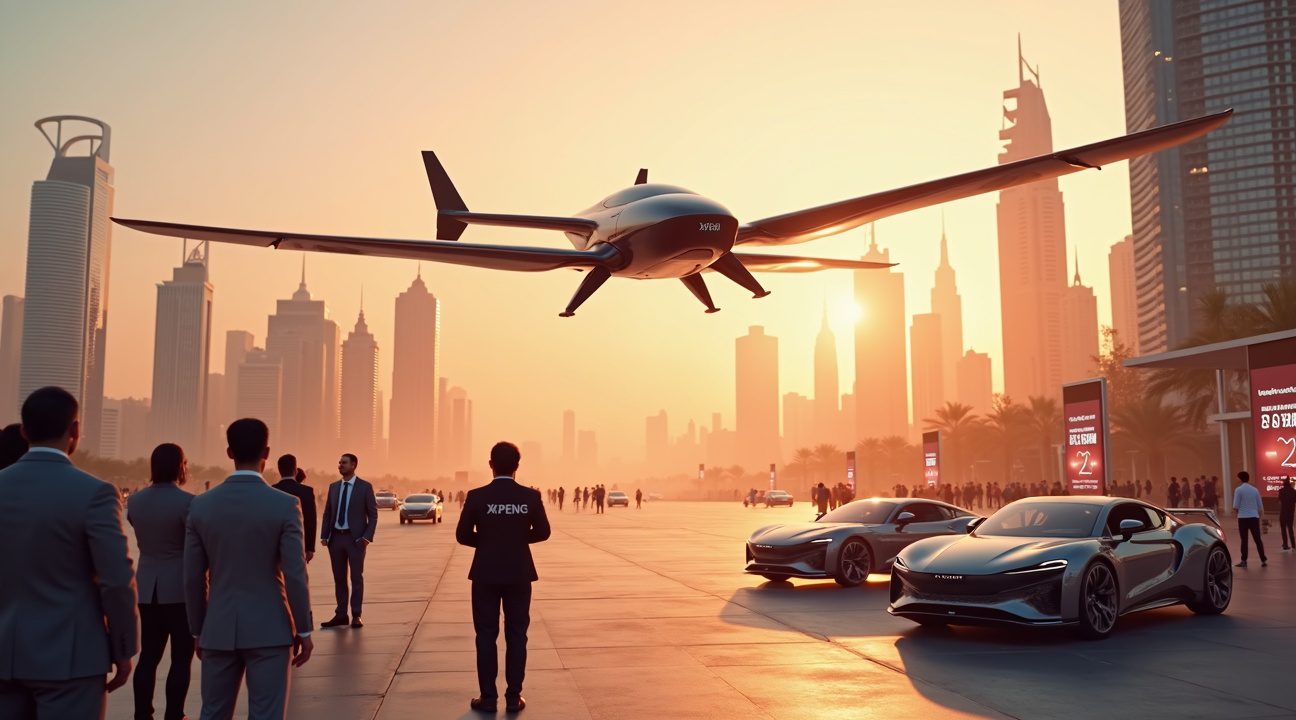
The Gulf region has emerged as an early adopter market, with XPENG confirming 600 solid orders from this area alone. Deliveries are scheduled to begin by 2027, giving the company time to ramp up production and refine manufacturing processes. The October 2025 public flight demonstration in Dubai marked a significant milestone as XPENG’s first public showcase outside China, generating considerable excitement among potential buyers and industry observers.
This Dubai demonstration wasn’t just a marketing exercise—it served as a real-world validation of the technology’s capabilities in international markets. The enthusiastic response from attendees and media coverage suggests that similar demonstrations in other regions could drive even higher demand.
Production Challenges and Expansion Opportunities
Current demand significantly outpaces the factory’s maximum initial production capacity of 10,000 units annually, creating both a challenge and an opportunity for XPENG AEROHT. This production bottleneck indicates several key factors:
- Manufacturing complexity requires careful scaling to maintain quality standards
- Component supply chains need time to mature and stabilize
- Regulatory approvals across different markets may influence production timing
- Quality control processes must be established for this entirely new vehicle category
The gap between demand and production capacity suggests strong prospects for future expansion. XPENG will likely need to either increase capacity at their existing facility or establish additional manufacturing locations to meet global demand effectively.
Companies in similar positions often leverage this initial scarcity to build brand prestige while they scale operations. The Land Aircraft Carrier’s premium pricing structure positions it squarely within the global luxury vehicle segment, where exclusivity can actually enhance desirability.
This positioning makes business sense given the advanced technology involved and the limited initial production runs. Luxury vehicle buyers often appreciate being early adopters of groundbreaking technology, especially when it offers genuine utility advantages like avoiding traffic congestion and reducing travel times.
The success of XPENG’s approach could influence how other manufacturers enter the flying vehicle market. Rather than attempting mass-market penetration immediately, starting with premium positioning allows companies to perfect their technology while building sustainable business models.
International interest extends beyond individual consumers, with potential applications in emergency services, luxury tourism, and executive transportation creating additional revenue streams. The Gulf region’s strong order numbers likely reflect both individual wealthy buyers and commercial operators recognizing the vehicle’s potential in their markets.
As production ramps up and autonomous vehicle technology continues advancing, flying cars may eventually transition from luxury items to more accessible transportation solutions. However, XPENG’s current approach of meeting initial demand through premium positioning while building manufacturing expertise represents a prudent strategy for entering this nascent market.
The strong pre-order numbers validate years of development investment and suggest that flying vehicles are moving from science fiction concepts to viable transportation alternatives. Success in meeting these initial delivery commitments will likely determine whether flying cars achieve broader market acceptance or remain niche luxury items for the foreseeable future.
https://www.youtube.com/watch?v=wNptpK3z1K0
China Surges Ahead of Global Competition in Flying Car Race
XPENG AEROHT’s mass production facility represents a decisive moment in the global flying car industry, putting Chinese manufacturers substantially ahead of international competitors who remain stuck in development phases. While other companies continue testing prototypes and seeking regulatory approval, China has moved directly to commercial manufacturing.
Tesla’s position in the flying car sector remains uncertain, with Elon Musk suggesting a demonstration is coming but providing no specific dates for production. This vague timeline contrasts sharply with China’s operational factory and immediate production capabilities. Alef Aeronautics has made progress through testing completion and plans production soon, though their vehicle requires both driver’s and light plane pilot’s licenses, creating potential market barriers.
Commercial Approval Gives China Additional Advantages
EHang has secured full commercial operation approval globally, making it the first flying car company to achieve this milestone. The company plans air taxi service launches within three years, positioning China not just for manufacturing leadership but operational dominance too. This regulatory head start complements the production advantages China has already established.
American companies Joby and Archer have conducted successful manned test flights, demonstrating technical capabilities. However, neither has built manufacturing infrastructure comparable to XPENG’s facility. Their progress remains limited to testing phases while China scales up actual production lines.
Financial challenges plague many Western competitors, with several European startups declaring insolvency. Prominent U.S. companies face ongoing funding difficulties, preventing them from advancing beyond prototype stages. These financial constraints have effectively eliminated multiple competitors from the race, leaving China with reduced international competition.
The production gap between China and global competitors continues widening as XPENG begins actual manufacturing operations. While international companies focus on demonstrations and regulatory hurdles, Chinese manufacturers are building vehicles and preparing for market delivery. This operational advantage could prove insurmountable as autonomous vehicle technology becomes increasingly integrated with flying car systems.
China’s regulatory environment has proven more conducive to flying car development, enabling faster progression from concept to commercial reality. The combination of manufacturing capabilities, regulatory support, and financial backing has created a perfect storm for Chinese dominance in this emerging industry. As global competitors struggle with funding and regulatory approval processes, China’s first-mover advantage in mass production establishes a foundation that may be difficult for other nations to match.
Revolutionary Manufacturing Blends Automotive and Aviation Standards
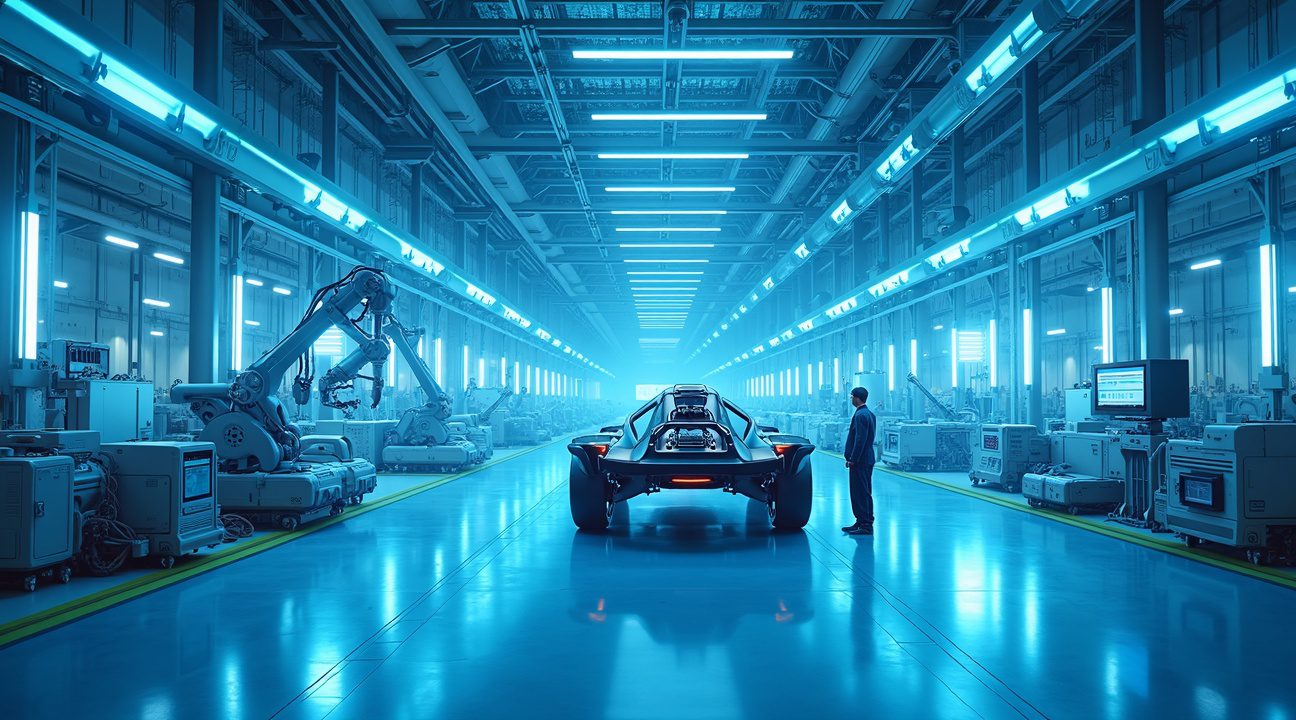
The XPENG factory represents a groundbreaking fusion of automotive efficiency and aerospace precision, creating an entirely new paradigm for vehicle manufacturing. I’ve observed how this facility combines the best of both industries, utilizing highly automated robotic systems that evolved from electric vehicle production lines but enhanced to achieve aviation-grade accuracy requirements.
Advanced Automation Systems Drive Production Excellence
The factory’s operational backbone consists of sophisticated automation technologies specifically designed to handle the unique demands of flying car production. Several key systems work together to achieve this ambitious manufacturing goal:
- Automotive-grade riveting robots ensure consistent joint quality across every vehicle frame
- Advanced logistics robots maintain seamless parts delivery throughout the sprawling facility
- Precision assembly stations adapted from aerospace manufacturing maintain strict tolerances
- Quality control systems that exceed both automotive and aviation certification standards
With an ambitious target of producing 10,000 units annually, automation isn’t just beneficial—it’s absolutely essential for meeting production goals while maintaining safety standards. Traditional manual assembly methods simply can’t achieve the scale and consistency required for this revolutionary product category.
The manufacturing approach cleverly merges cost-efficient, high-volume automotive techniques with the exacting standards typically reserved for aircraft fabrication. This integration is particularly impressive because it addresses one of the biggest challenges in bringing flying vehicles to market: making them affordable while ensuring absolute safety reliability.
This technological convergence draws heavily from electric vehicle manufacturing experience, where precision robotics and quality control systems have already proven their effectiveness. However, the aerospace manufacturing expertise adds critical layers of inspection and validation that automotive production rarely requires. Every component must meet dual certification standards, creating a manufacturing environment that’s more rigorous than either industry typically demands.
The factory’s design philosophy demonstrates how manufacturers can scale advanced mobility solutions without compromising on safety or quality. By adapting proven automotive production methods and enhancing them with aerospace-level precision, XPENG has created a template that other manufacturers will likely study and replicate. This approach could accelerate the broader adoption of advanced transportation technologies across the industry.
The facility’s success will largely determine whether flying cars can transition from expensive prototypes to mainstream transportation options, making this manufacturing innovation as significant as the vehicles themselves.
Government Support Drives China’s Low-Altitude Economy Strategy
Beijing has designated the ‘low-altitude economy’ as a critical strategic sector for the next five years, demonstrating unprecedented commitment to aerial transportation development. I’ve observed how this comprehensive government backing provides Chinese manufacturers with significant advantages over international competitors, particularly in establishing the infrastructure needed for flying car production.
Provincial governments across China are actively removing regulatory barriers to accelerate sectoral expansion. Guangdong and Sichuan provinces have already implemented streamlined approval processes for flying vehicle testing and certification. These regulatory adjustments enable companies to move from prototype development to commercial production faster than their counterparts in markets with more restrictive oversight frameworks.
Market Potential and Technical Advantages
Boston Consulting Group projects the low-altitude economy market will reach $41 billion by 2040, highlighting the enormous commercial potential driving Chinese investment strategies. China’s positioning in this emerging market leverages existing strengths in drone technology and electric vehicle manufacturing. The country’s established supply chains for electric components provide cost advantages that are difficult for other nations to match.
Chinese manufacturers benefit from several key competitive factors:
- Advanced electric motor technology developed for the EV industry
- High-performance battery manufacturing capabilities
- Streamlined supply-chain networks reducing production costs
- Government subsidies supporting research and development initiatives
- Integrated testing facilities accelerating product validation
The convergence of electric vehicle expertise with drone technology creates a unique advantage for Chinese companies entering the flying car market. I’ve noticed how established EV manufacturers can adapt their existing battery and motor technologies for aerial applications, significantly reducing development timelines compared to starting from scratch.
Recent technological breakthroughs in electric propulsion systems and energy storage solutions have brought consumer-oriented flying vehicles closer to reality. Chinese manufacturers are capitalizing on these advances by scaling production capabilities before international competitors establish market presence. This timing advantage, combined with government support, positions China to become the global hub for flying car manufacturing.
The integration of autonomous driving technology with aerial vehicles represents another area where Chinese companies maintain competitive advantages. Their experience with AI-powered navigation systems and sensor integration provides a foundation for developing the complex flight management systems required for commercial flying cars.
China’s strategic approach extends beyond manufacturing to encompass the entire ecosystem needed for flying car adoption. Government investments in air traffic management infrastructure, charging networks, and regulatory frameworks create conditions favorable for rapid market development once production scales reach commercial viability.
https://www.youtube.com/watch?v=rAwHCrZ_aAg
Sources:
China Daily – Pioneering flying car factory begins trial production in south China
CGTN – Pioneering flying car factory begins trial production in south China
Republic World – China opens world’s first flying car factory
Euronews – World’s first flying car factory begins production in China
Global Times – (article title not specified)
Daily Sabah – China leverages EV expertise to accelerate flying car ambitions
The Japan Times – (article title not specified)