


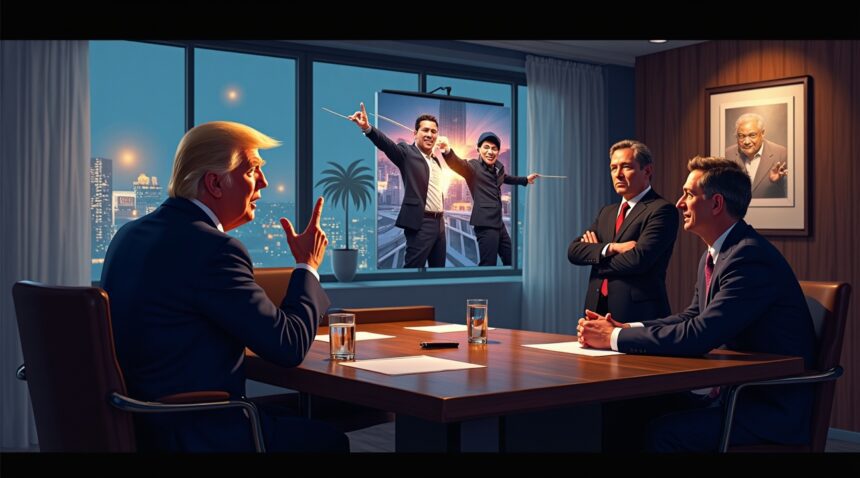
President Donald Trump directly intervened to resurrect the Rush Hour franchise after an 18-year gap, personally lobbying Larry Ellison to greenlight the fourth installment through an unprecedented Hollywood deal structure.
Paramount Confirms “Rush Hour 4”
Paramount Pictures has officially announced the production of Rush Hour 4, with Jackie Chan and Chris Tucker reprising their legendary roles as Detective Lee and Detective Carter. The confirmation comes amidst long-standing industry rumors and uncertainty surrounding the aging franchise.
Key Takeaways
- Trump personally lobbied Larry Ellison, paramount’s largest shareholder, to greenlight Rush Hour 4, showcasing a rare crossover of politics and Hollywood production decisions.
- Paramount and Warner Bros. formed a unique partnership: Paramount will distribute the film, while Warner Bros. retains ownership of the intellectual property—a highly unusual arrangement in the movie industry.
- Veteran stars Jackie Chan (71) and Chris Tucker (54) are confirmed to return. Both actors have underscored the urgency in filming soon due to physical demands of action sequences.
- The film bears a $100 million budget, sparking skepticism among industry insiders who question audience demand nearly two decades after Rush Hour 3.
- Director Brett Ratner returns to helm his fourth installment, marking his re-entry into major studio directing following his fall from grace during the #MeToo movement.
Industry Reaction
While the film is set to generate fan excitement, some film executives have labeled the project a “terrible idea,” citing both the high cost and uncertainty in box office returns. Nevertheless, the blend of political drama, nostalgia, and an attempt at redemption for the director promises a high-profile production that will be closely watched.
Stay tuned as production progresses for what may be one of the most unlikely Hollywood comebacks in recent memory.

Trump Personally Lobbied for Rush Hour 4 Revival After 18-Year Gap
President Donald Trump directly intervened to resurrect the Rush Hour franchise, personally lobbying Larry Ellison, Paramount Skydance’s largest shareholder, to greenlight the long-awaited fourth installment. Entertainment journalist Matthew Belloni first reported this unprecedented Hollywood development through his ‘What I’m Hearing’ newsletter on November 25, 2025, revealing that Trump’s lobbying effort specifically targeted supporting director Brett Ratner’s return to the franchise.
The unusual circumstances behind Rush Hour 4’s confirmation stem from Trump’s existing professional relationship with Ratner, forged during the production of the Melania documentary. This connection provided the foundation for what multiple industry outlets, including Variety, Semafor, and Deadline, have confirmed as one of the most bizarre deal structures in recent Hollywood memory.
Direct White House Involvement in Studio Decisions
Trump’s approach bypassed traditional Hollywood channels by targeting Larry Ellison directly, leveraging the tech billionaire’s position as both Paramount Skydance’s primary shareholder and father of Paramount CEO David Ellison. Industry sources describe this as representing unprecedented executive intervention in studio greenlight decisions, with some observers drawing parallels to “state-controlled media” characteristics.
The intervention comes after an 18-year gap since Rush Hour 3‘s release in 2007, during which period fans continuously speculated about what happened to Rush Hour 4. Various obstacles had previously prevented the sequel’s development, including:
- Scheduling conflicts between Jackie Chan and Chris Tucker
- Budget negotiations
- Shifting studio priorities
White House involvement in entertainment industry decisions marks a significant departure from traditional Hollywood operations, where studio executives typically maintain autonomy over project selections based on market research, talent availability, and financial projections. Trump’s personal advocacy for Ratner reflects both their collaborative history and the former president’s willingness to leverage political influence in entertainment matters.
The timing of this intervention coincides with renewed interest in action-comedy franchises, particularly those featuring established international stars like Jackie Chan. Chris Tucker’s return alongside Chan has generated significant fan excitement, though industry analysts remain divided on whether political intervention will translate into box office success.
Brett Ratner’s involvement brings both experience and controversy to the project. Having directed all three previous Rush Hour films, Ratner understands the franchise’s comedic timing and action choreography requirements. However, his recent career has been marked by various industry challenges, making Trump’s advocacy particularly significant for his professional rehabilitation.
Larry Ellison’s response to Trump’s lobbying demonstrates the complex intersection of technology, politics, and entertainment in modern Hollywood. Ellison’s dual role as Oracle Corporation’s founder and major entertainment investor positions him uniquely to navigate such unprecedented requests. His decision to support the project reflects both business calculations and personal relationships within elite circles.
The deal structure confirmation by multiple entertainment industry publications validates Belloni’s initial reporting while highlighting the unusual nature of political involvement in studio decisions. Industry observers continue monitoring how this precedent might influence future entertainment projects and executive decision-making processes.
This intervention represents more than simple celebrity advocacy, establishing a new template for how political figures might influence entertainment industry choices. The success or failure of Rush Hour 4 will likely impact future instances of similar high-level lobbying efforts in Hollywood productions.
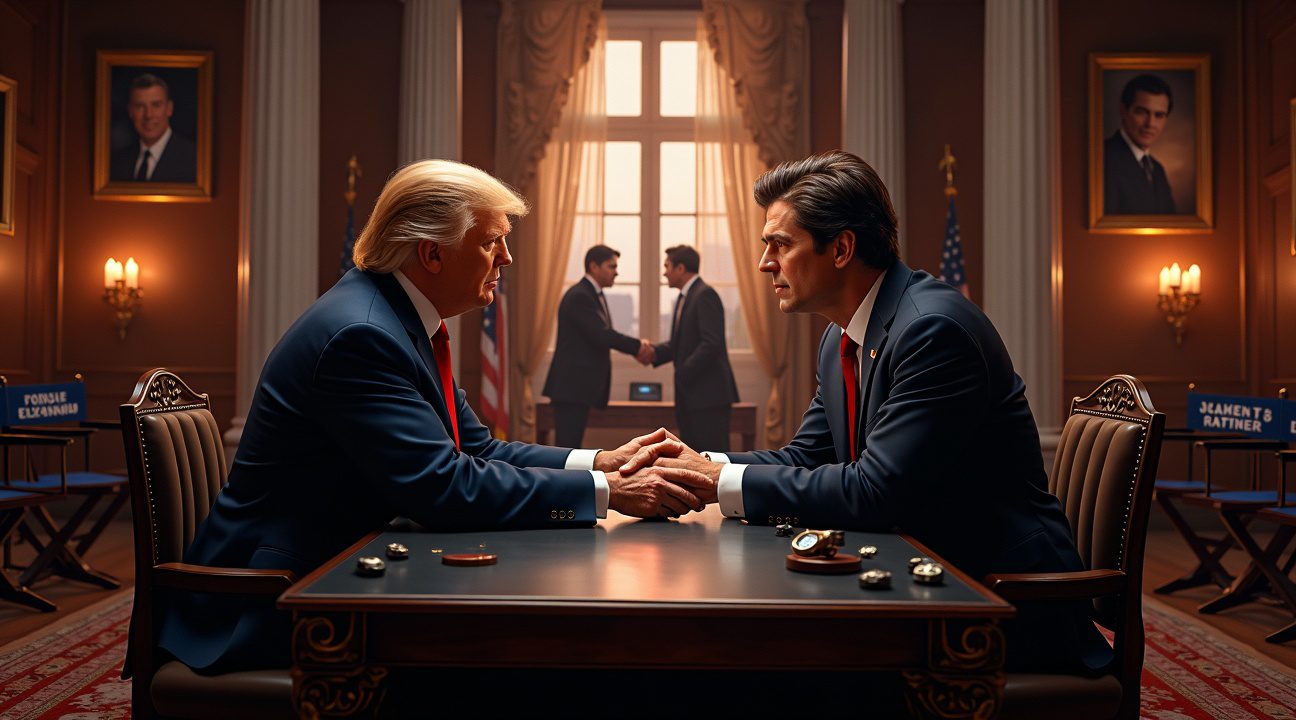

Paramount Officially Greenlights Fourth Installment in Unusual Studio Partnership
After nearly two decades of false starts and development limbo, Paramount Pictures has officially greenlit Rush Hour 4 in an unprecedented partnership arrangement that’s turning heads across Hollywood. The announcement came in November 2025, finally pulling the beloved action-comedy franchise out of its 18-year hibernation period.
Distribution Deal Breaks Traditional Studio Boundaries
This greenlight represents far more than just another sequel announcement—it marks the first major collaboration between Paramount and Warner Bros. in recent memory. Under this unique arrangement, Paramount will handle distribution duties for the film while Warner Bros. maintains ownership of the original film rights. The partnership operates on a flat distribution fee model, where Paramount collects a percentage of revenues without shouldering the financial burden of production or development costs.
This structure allows both studios to leverage their respective strengths while minimizing risk exposure. Warner Bros. retains creative control and ownership stakes in the Rush Hour property, while Paramount brings its distribution expertise and theater relationships to maximize the film’s commercial reach. Producer Tarak Ben Ammar is actively securing financing for the production, though specific budget details haven’t been disclosed.
Production Timeline and Development Status
Despite the official greenlight, Rush Hour 4 hasn’t entered active production as of the announcement date. The project remains in pre-production phases while key elements fall into place. This careful approach reflects lessons learned from previous attempts to revive the franchise, which stalled due to scheduling conflicts, script issues, and financial disagreements between various parties.
The current development timeline suggests a methodical approach to bringing Jackie Chan and Chris Tucker back together for their fourth outing as Detective Inspector Lee and Detective James Carter. Industry insiders indicate that both stars have expressed enthusiasm for returning to their iconic roles, though formal contracts haven’t been finalized. The delay in production start allows for proper script development and ensures all logistical elements align before cameras begin rolling.
This partnership model could set new precedents for how major studios collaborate on high-profile projects. Rather than competing for exclusive rights or engaging in costly bidding wars, Paramount and Warner Bros. have found a way to combine resources while respecting existing intellectual property arrangements. The success of this collaboration could influence future inter-studio partnerships, particularly for legacy franchises that have complex rights histories.
For fans who’ve waited nearly two decades for Rush Hour 4 confirmation, this official greenlight represents a significant milestone. Previous announcements over the years proved premature, but this Paramount partnership provides the infrastructure and commitment needed to finally bring the project to fruition. The involvement of established producer Tarak Ben Ammar adds credibility to the endeavor, given his track record with international co-productions and complex financing arrangements.
The flat distribution fee structure also suggests confidence in the project’s commercial viability. Paramount wouldn’t commit to distribution responsibilities without believing in the franchise’s continued box office appeal. This confidence stems partly from the enduring popularity of the original Rush Hour trilogy, which generated over $845 million worldwide and remains a cultural touchstone for action-comedy films.
While production timelines remain fluid, the official greenlight and studio partnership provide the foundation needed to move forward. The careful approach to development, combined with the unique distribution arrangement, positions Chris Tucker’s return alongside Jackie Chan as a highly anticipated cinematic event rather than a rushed cash grab. This methodical strategy could prove essential for delivering a sequel that honors the franchise’s legacy while appealing to both longtime fans and new audiences.
Brett Ratner Returns Despite #MeToo Controversy and Hollywood Exile
Brett Ratner steps back into the director’s chair for the fourth installment, continuing his work on the franchise that helped establish his career in Hollywood. I’ve watched Ratner helm all three previous Rush Hour films between 1998 and 2007, making his return both a continuation of tradition and a significant comeback story.
The director’s return marks his first major studio project since 2017, when his Hollywood career took a dramatic turn following the emergence of #MeToo allegations. Multiple women came forward with accusations against Ratner, including actresses Olivia Munn and Natasha Henstridge, who alleged sexual misconduct and harassment. Ratner has categorically denied all allegations made against him.
Hollywood Exile and Recent Projects
Ratner hasn’t remained completely absent from entertainment during his time away from mainstream Hollywood. He recently completed directing a documentary about former First Lady Melania Trump, which Amazon acquired for a reported $40 million. The Melania documentary is scheduled for theatrical release in January 2026, demonstrating that Ratner has maintained some industry connections despite his controversies.
Some industry publications have labeled him a “disgraced Hollywood director”, reflecting the divided opinions about his return to high-profile filmmaking. However, his involvement with Rush Hour 4 suggests that studios are willing to work with him again, particularly given his established relationship with the franchise.
Directorial Legacy and Franchise Continuity
Ratner’s directorial span across the Rush Hour franchise covers nearly three decades, from the original 1998 film through the upcoming 2026 release. His familiarity with the characters, comedic timing, and action sequences that define the series makes him an obvious choice for maintaining franchise consistency. The chemistry between Jackie Chan and Chris Tucker that Ratner cultivated in previous films remains a crucial element that fans expect to see preserved.
The decision to bring back Ratner also reflects practical considerations beyond creative ones. His understanding of both Chan’s martial arts choreography style and Tucker’s improvisational comedy creates a shorthand that could prove valuable for production efficiency. The director’s previous work establishing the franchise’s tone and pacing gives him advantages that a newcomer might struggle to replicate.
Industry observers note that Ratner’s return coincides with broader discussions about redemption and second chances in Hollywood. His work on the upcoming sequel will likely be scrutinized not just for its entertainment value, but as a test case for whether controversial figures can successfully return to mainstream filmmaking.
The timing of Ratner’s comeback also intersects with renewed interest in the franchise, particularly given the long-awaited sequel that fans have been requesting for years. His return addresses one less variable in an already complex production involving aging stars and evolving audience expectations.
Ratner’s involvement represents both continuity and controversy for Rush Hour 4. While his directorial experience with the franchise provides creative advantages, his return also brings unwanted attention that could overshadow the film’s release. The success or failure of this comeback may influence how Hollywood handles similar situations in the future, making Rush Hour 4 significant beyond its entertainment value.
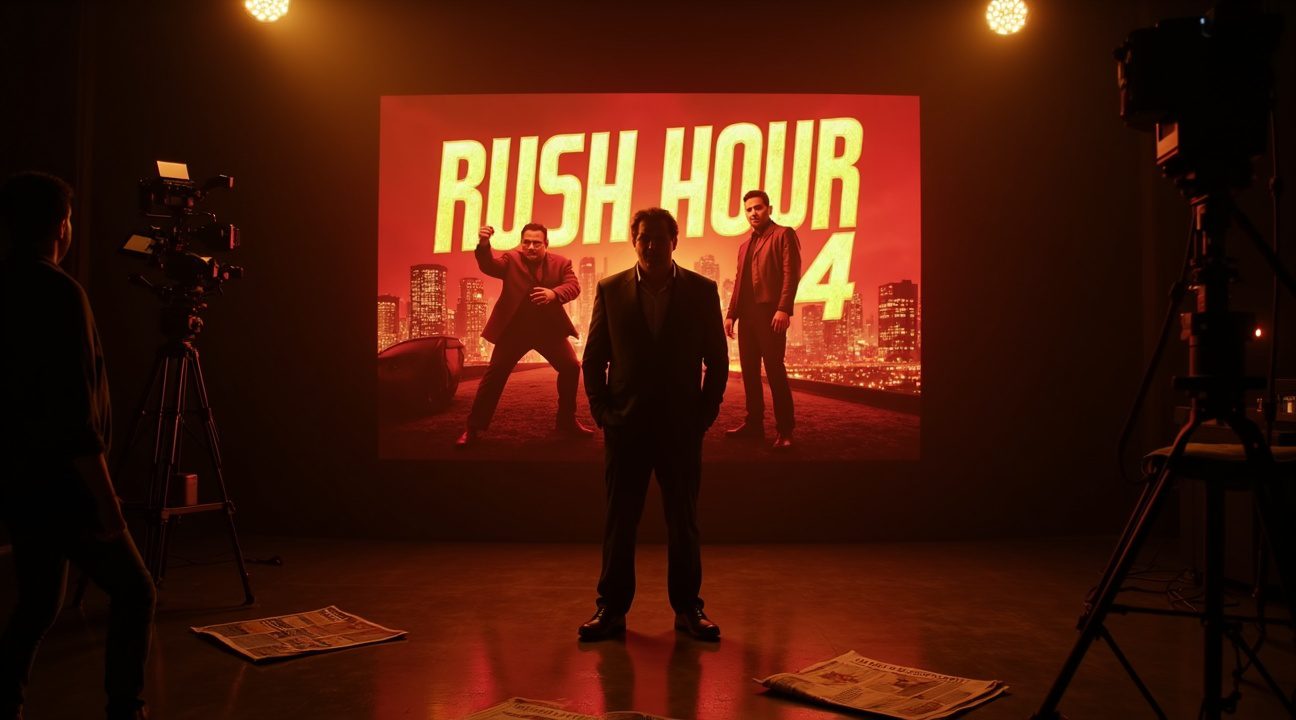
Jackie Chan and Chris Tucker Racing Against Time at Ages 71 and 54
Both legendary stars are expected to reprise their iconic roles in the highly anticipated sequel. Jackie Chan will return as Detective Lee, while Chris Tucker steps back into Detective Carter’s shoes once again. At 71 and 54 years old respectively, the actors face unique challenges that differ significantly from their earlier franchise experiences.
Chan recently expressed his urgency about moving forward with production in a May 2025 ScreenRant interview. He emphasized the time-sensitive nature of the project, stating: “Ask the director, ask the studio, ask the writer. Hurry up! Otherwise, Chris Tucker and me [will be] 100 years old. We’ll be old men doing Rush Hour.” His comments reflect growing concerns about age-related limitations affecting their ability to deliver the high-energy performances fans expect.
Both actors have publicly confirmed their willingness to return despite the physical demands. Tucker’s enthusiasm for returning to Rush Hour matches Chan’s eagerness, though both acknowledge the reality of performing action sequences at their current ages. Previous interviews revealed their shared concerns about executing the franchise’s signature high-stakes stunts safely and convincingly.
Age-Related Production Considerations
Several factors will influence how the production accommodates the actors’ ages:
- Stunt coordination may require more doubles and CGI assistance than previous films
- Fight choreography will likely adapt to showcase strategic combat over purely physical prowess
- Action sequences may focus more on wit and timing rather than demanding acrobatics
- Production schedules might extend to allow for adequate rest periods between intense filming days
- Insurance considerations for both actors will impact shooting locations and stunt complexity
The duo’s chemistry remains their greatest asset, transcending physical limitations that naturally come with age. Chan’s martial arts expertise continues to evolve, emphasizing technique and precision over raw athleticism. Tucker’s comedic timing has only sharpened over the years, potentially creating even stronger character dynamics than previous installments.
Franchise continuity becomes crucial since both actors starred in all three prior films. Their return maintains the authentic relationship between Lee and Carter that made the series successful. Fans have specifically requested their involvement, making any recasting virtually impossible for the production team.
Studios haven’t released final casting announcements yet, keeping negotiations active behind the scenes. Cast finalization remains ongoing and pending official studio confirmation. Industry insiders suggest that contract discussions focus heavily on accommodating the actors’ physical limitations while preserving the franchise’s action-comedy balance.
Chan’s recent projects demonstrate his continued capability to perform modified action sequences effectively. Tucker’s selective film choices indicate his commitment to quality over quantity, making Rush Hour 4’s development particularly significant for his career trajectory.
The production team faces the challenge of honoring the franchise’s legacy while adapting to practical limitations. Creative solutions will likely emerge that highlight the characters’ experience and wisdom rather than purely physical capabilities. This approach could actually enhance the story by showing how both detectives have evolved professionally and personally.
Early script developments reportedly account for the actors’ ages, incorporating storylines that justify slightly different action approaches. Character development may shift focus toward mentorship roles or investigative expertise rather than hand-to-hand combat scenarios.
Time pressure intensifies as both actors acknowledge the narrow window for completing another film. Jackie Chan’s confirmation of the project signals serious momentum, though scheduling conflicts and health considerations continue to influence production timelines.
Production companies must balance fan expectations with realistic capabilities, ensuring the final product maintains the franchise’s entertainment value while respecting the actors’ current physical limitations. Success will depend on creative adaptation rather than attempting to recreate identical action sequences from earlier films.
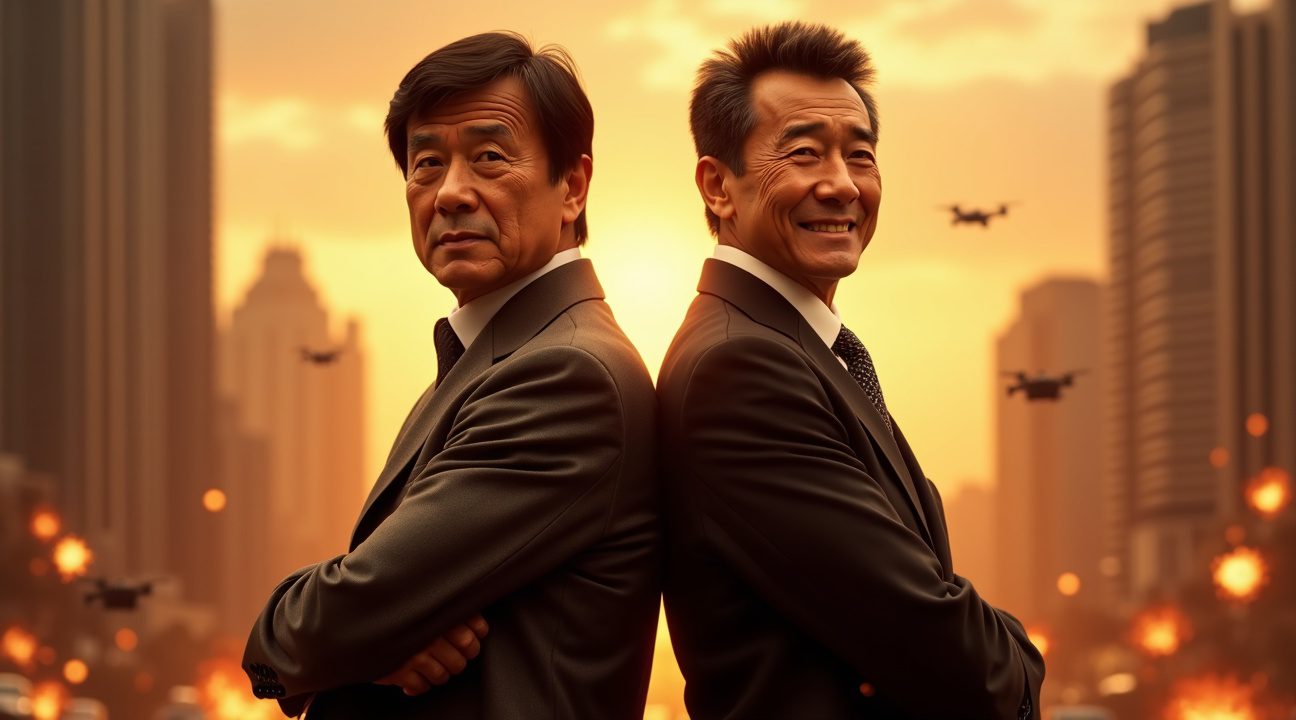
$100 Million Budget Faces Industry Skeicism Despite $900 Million Franchise Success
The reported $100 million budget for Rush Hour 4 has created significant waves throughout Hollywood, though not necessarily positive ones. Industry executives and entertainment figures haven’t held back their criticism, with many describing Rush Hour 4 as a terrible idea despite the franchise’s impressive financial track record.
Studio executives have expressed considerable skepticism about the project’s commercial viability, raising questions that go beyond mere budget concerns. Their primary worry centers on the substantial time gap between Rush Hour 3‘s release in 2007 and this planned fourth installment. This extended hiatus represents nearly two decades of separation from audiences, creating uncertainty about whether viewers still maintain fond feelings for the beloved characters of Detective James Carter and Chief Inspector Lee.
The skepticism appears particularly puzzling given the franchise’s extraordinary financial success. The three Rush Hour films have collectively generated approximately $850–900 million at the worldwide box office since the original film’s debut in 1998. This impressive figure demonstrates the enduring commercial appeal of Jackie Chan and Chris Tucker’s partnership, even as industry veterans question whether that magic can be recaptured.
International Market Performance Drives Franchise Value
The franchise’s strength extends far beyond domestic box office numbers, with international markets playing a crucial role in its success. Asian markets, in particular, have shown consistent enthusiasm for the series, largely due to Jackie Chan’s massive popularity throughout the region. This international appeal has been instrumental in pushing the franchise’s worldwide earnings close to the $900 million mark across all three films.
The global reach of the Rush Hour brand presents both an opportunity and a challenge for the fourth installment. While international audiences have historically embraced the series, the entertainment landscape has shifted dramatically since 2007. Streaming platforms, changing viewing habits, and evolving audience preferences have transformed how action comedies perform in international markets.
Industry discussions frequently return to the fundamental question of audience connection. Do moviegoers still care about the mismatched detective duo that once dominated action-comedy box office charts? The answer could determine whether the substantial investment proves worthwhile or becomes another cautionary tale about reviving dormant franchises.
The $100 million budget represents a significant commitment from studios, especially considering the uncertainty surrounding audience demand. This figure places Rush Hour 4 in the category of major blockbuster productions, requiring substantial international success to justify the investment. The budget allocation suggests confidence in the franchise’s earning potential, despite vocal industry skepticism.
Jackie Chan’s confirmation of the project’s development has added legitimacy to the endeavor, though it hasn’t silenced critics who view the lengthy delay as potentially damaging to the franchise’s momentum. The actor’s continued popularity, particularly in Asian markets, provides some reassurance about international box office potential.
The tension between past success and current skepticism reflects broader industry trends regarding franchise revivals. Studios must balance nostalgia factor with contemporary audience expectations, creating films that honor the original while appealing to modern viewers. This challenge becomes more complex with each passing year since the last installment.
Financial projections for Rush Hour 4 will likely depend heavily on international performance, given the franchise’s historical strength in overseas markets. The nearly $900 million in worldwide earnings across the first three films provides a strong foundation for optimism, though critics argue that past performance doesn’t guarantee future success in today’s competitive entertainment environment.
The debate surrounding Rush Hour 4‘s viability continues to divide industry professionals, with some viewing the massive budget as excessive risk-taking while others see untapped potential in reuniting one of action-comedy’s most successful partnerships. Time will ultimately determine whether this substantial investment pays off or becomes another expensive lesson about the challenges of reviving beloved franchises after extended absences.

Production Timeline Remains Unclear Following Extended Development Limbo
No official release date has emerged for Rush Hour 4, leaving fans guessing about when they’ll see Jackie Chan and Chris Tucker return to action. Production hasn’t started on the film despite the recent announcement, which means audiences shouldn’t expect to see the dynamic duo back on screens anytime soon.
Years of Development Discussions
Development conversations began gaining traction in 2022, when Jackie Chan openly discussed the project’s potential. Chan confirmed at that time that the creative team was “talking about ideas” for the fourth installment. He also revealed he’d been in contact with an unnamed director about bringing the beloved action-comedy franchise back to life.
These early discussions represented the first concrete movement on the project in years, yet the film remained stuck in development limbo for an extended period. Despite ongoing conversations between key players, progress stalled repeatedly. The project faced numerous obstacles that prevented it from moving into active production phases.
Recent Acceleration and Significant Time Gaps
Development has reportedly accelerated following what sources describe as a Trump-influenced greenlight in November 2025. This development suggests external factors beyond creative considerations played a role in finally pushing the project forward. However, the exact nature of this influence remains unclear, as does how it will impact the film’s ultimate production schedule.
The timing considerations for Rush Hour 4 present unprecedented challenges:
- An 18-year gap has passed since Rush Hour 3 hit theaters in 2007.
- There is a 27-year span between the original 1998 Rush Hour and the planned 2026 release.
These extended gaps between installments are unusual for action franchises, particularly those built around specific actor partnerships. Chan and Tucker were both in their prime during the original trilogy, and their ages now – Chan is in his 70s – add complexity to the action sequences that made the series famous.
The production team faces unique challenges in bridging such an extensive time gap. Audience expectations have evolved significantly since 2007, and the action-comedy landscape has changed dramatically. Modern audiences consume content differently, and the buddy-cop format that once dominated box offices now competes with superhero films and streaming series for attention.
Chris Tucker’s return alongside Chan suggests both actors remain committed to the project despite the lengthy delays. Their willingness to revisit these characters after such an extended break indicates confidence in the story concept, even as specific plot details remain under wraps.
The lack of a confirmed director continues to complicate timeline predictions. While Chan mentioned discussions with a director in 2022, no official announcement has identified who will helm the project. This missing piece represents another variable that could significantly impact when cameras actually start rolling.
Industry observers note that modern film production typically requires 18–24 months from the start of principal photography to theatrical release. With production yet to begin, even an optimistic timeline would place Rush Hour 4’s release well into 2026 or beyond. This reality makes the rumored 2026 target date appear increasingly ambitious.
The extended development period has allowed the creative team to refine their approach, but it has also created pressure to deliver something exceptional. Fans have waited nearly two decades for the long-awaited sequel, raising expectations for a film that must justify its lengthy gestation period.
Despite the uncertainty surrounding specific dates and production schedules, the project’s recent momentum suggests Rush Hour 4 will eventually reach theaters. However, patience remains essential as the complex process of bringing together aging stars, finding the right director, and crafting a story worthy of the franchise’s legacy continues to unfold.
Sources:
Entertainment journalist Matthew Belloni – “What I’m Hearing” newsletter
Variety
Semafor
Deadline
ScreenRant