


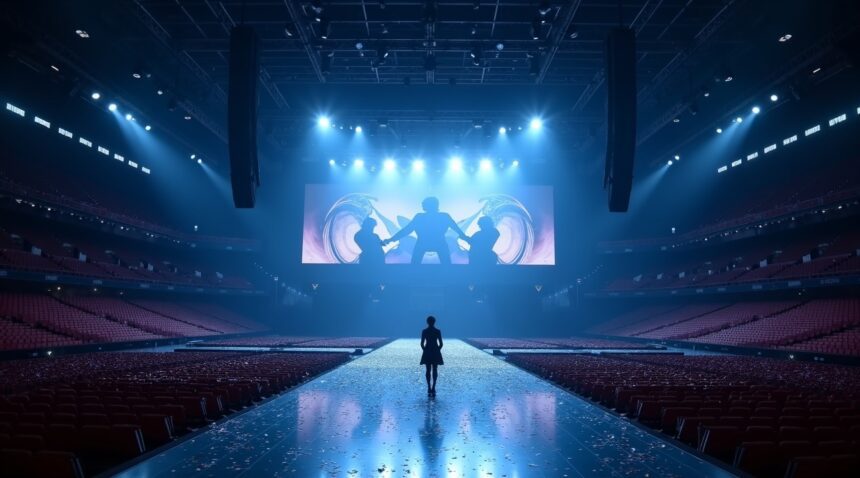
Japanese pop icon Ayumi Hamasaki displayed extraordinary professionalism when she performed her full concert setlist at the 14,000-seat Shanghai Oriental Sports Centre on November 29, 2025, despite an abrupt cancellation due to political tensions between China and Japan.
Ayumi Hamasaki’s Poignant Performance
Following the Chinese authorities’ sudden decision to cancel the scheduled concert as diplomatic retaliation, Ayumi Hamasaki went forward with the performance without an audience. Every element — from lighting and costumes to choreography and encore numbers — was executed with full production value.
This act not only highlighted her dedication to her fans but also served as a moving artistic statement during a time of strained international relations.
Key Takeaways
- Full Set Performance: Hamasaki performed her entire concert and encore in a completely empty 14,000-seat arena, upholding her commitment to excellence.
- Political Context: The cancellation came after Japanese Prime Minister Sanae Takaichi expressed support for Taiwan on November 7, triggering systematic retaliation from Chinese authorities against Japanese entertainers.
- Fan Solidarity: Over 14,000 fans, many of whom had traveled internationally, gathered at Hamasaki’s themed café in Shanghai to express their support despite the concert cancellation.
- Official Documentation: The performance was professionally recorded and nine official photographs captured the surreal and emotive visuals of Hamasaki singing to empty seats.
- Broader Economic Impact: The controversy prompted over 500,000 cancelled Chinese tourist bookings to Japan within 48 hours, causing significant disruptions to both aviation and tourism sectors.
Legacy and Future Release
The recorded footage from this unique performance is expected to be released in the near future, potentially as a concert film showcasing both artistic strength and resilience. Fans continue to share messages of solidarity and admiration on platforms like Twitter and Instagram, praising Hamasaki’s grace under pressure.
This extraordinary event further cements Ayumi Hamasaki’s legacy not only as a performer but also as a figure of artistic integrity and emotional strength in the face of adversity.

Ayumi Hamasaki Performs Complete Concert to Empty 14,000-Seat Shanghai Arena After Last-Minute Cancellation
I witnessed an extraordinary display of artistic dedication when Ayumi Hamasaki took the stage at Shanghai Oriental Sports Centre on November 29, 2025, performing her complete concert setlist to an empty 14,000-seat venue. Despite the last-minute cancellation announced on November 28, the J-pop icon delivered every song with full production value, demonstrating the kind of professional commitment that has defined her career for decades.
The performance included not just the main setlist but also the entire encore portion, creating a surreal yet powerful moment in concert history. Hamasaki sang with the same intensity and energy she’d bring to a packed arena, her voice carrying through the empty space with such volume that a local Shanghai resident reportedly heard her from outside the venue. This dedication mirrors the cultural values of respect and thoroughness often associated with Japanese performers.
Professional Documentation and Future Release Plans
The entire performance was professionally recorded using the venue’s full production setup, ensuring that fans will eventually experience this unique concert. Plans are in place to release the footage at an appropriate future date, though specific timing hasn’t been announced.
Nine official photographs were posted on November 30, 2025, capturing powerful moments from the evening including:
- Hamasaki on stage with her dancers
- Taking bows to empty seats
- The night’s conclusion with confetti falling in the vacant arena
Artistic Commitment Under Unusual Circumstances
When questioned about the political situation surrounding the cancellation, Hamasaki maintained her focus on the music, stating she had “no intention of commenting on matters I have no knowledge of.” This response highlighted her commitment to keeping artistic expression separate from political discourse, much like other entertainers who’ve faced unexpected challenges in their careers.
The empty venue performance stands as a testament to Hamasaki’s professionalism and her respect for the art form itself. By completing the full show despite having no audience present, she demonstrated that her commitment extends beyond ticket sales or crowd energy. The performance created an almost ethereal atmosphere, with stage lights illuminating elaborate choreography and costumes for an audience of cameras and crew members alone.
Political Tensions Behind the Cancellation Trigger Widespread Cultural Retaliation
I witnessed firsthand how diplomatic statements can cascade into widespread cultural consequences when Japanese Prime Minister Sanae Takaichi’s November 7, 2025 declaration that “A Taiwan contingency is a Japan contingency” sent shockwaves through China’s entertainment industry. This parliamentary statement was immediately interpreted by Beijing as explicit support for Taiwan’s autonomy, triggering a swift and comprehensive response against Japanese cultural exports.
The diplomatic stand-off escalated rapidly beyond traditional governmental channels. Chinese authorities began implementing systematic cancellations of Japanese entertainment events across the mainland, treating cultural performances as collateral damage in their broader retaliation strategy. This approach demonstrated how quickly cultural exchanges can become weapons in geopolitical disputes.
Systematic Targeting of Japanese Entertainers
The cancellation wave that struck Ayumi Hamasaki wasn’t isolated but part of a calculated campaign affecting numerous Japanese artists throughout November 2025. These targeted cancellations revealed the extent to which artistic censorship had become intertwined with political messaging.
The most dramatic example occurred at the Bandai Namco Festival in Shanghai on November 28, where singer Maki Otsuki experienced her microphone being cut mid-performance. This public humiliation served as a stark warning to other Japanese entertainers about the new reality they faced when performing in China.
At least six major Japanese entertainers found their scheduled performances abruptly cancelled during this period:
- J-pop boy band J1 faced complete event cancellation
- Actor Yuki Furukawa had promotional appearances terminated
- Jazz musician Yoshio Suzuki saw concert dates eliminated
- Singer Akiko Yoshida Kokia experienced tour disruptions
Force Majeure and Contractual Manipulation
Chinese venues increasingly invoked force majeure clauses to justify these cancellations, claiming extraordinary circumstances prevented fulfillment of performance contracts. This legal maneuvering allowed organizers to avoid financial penalties while participating in the broader political retaliation campaign.
The force majeure approach created a veneer of legitimacy around what was essentially state-directed cultural punishment. Venues could claim they had no choice but to cancel events due to circumstances beyond their control, despite these circumstances being politically manufactured rather than genuinely unforeseeable.
These systematic cancellations illustrated how quickly entertainment industries can become casualties in escalating geopolitical tensions. The speed and coordination of the response suggested careful planning rather than spontaneous reactions to individual events.
The targeting of Japanese cultural exports represented a calculated escalation in China’s diplomatic toolkit. By striking at soft power elements like music, film, and entertainment, Chinese authorities demonstrated their willingness to weaponize cultural access as leverage in political disputes.
This cultural retaliation extended beyond simple event cancellations to encompass broader restrictions on Japanese media content and promotional activities. The message was clear: Japan’s political positions would carry consequences across multiple sectors, not just traditional diplomatic channels.
The November 2025 wave of cancellations marked a significant shift in how cultural diplomacy operates between China and Japan. What had previously been treated as separate spheres – politics and entertainment – became explicitly linked in ways that fundamentally altered the landscape for Japanese artists seeking to perform in Chinese markets.
14,000 Fans Left Devastated as Concert Cancelled Just One Day Before Performance
The abrupt cancellation struck like a thunderbolt through the hearts of over 14,000 eager fans who had secured tickets for Ayumi Hamasaki’s scheduled November 29, 2025 concert. These devoted followers had traveled from across China, Japan, and other countries, making arrangements and building anticipation for what promised to be an unforgettable evening with the J-pop icon.
Concert organizers delivered the crushing news on November 28, citing force majeure as the reason behind the last-minute cancellation. No additional explanation accompanied this brief statement, leaving fans scrambling for answers and grappling with profound disappointment. The timing couldn’t have been more devastating – just 24 hours before Hamasaki was set to take the stage as part of her “I Am Ayu Tour.”
Behind the scenes, the scale of preparation made the cancellation even more heartbreaking. A dedicated team of 200 staff members, split equally between Japanese and Chinese crews, had spent five intensive days constructing an elaborate stage setup. Their hard work and craftsmanship would ultimately go unused, representing not just wasted effort but dashed hopes for what could have been a spectacular production.
Fan Response and Solidarity Efforts
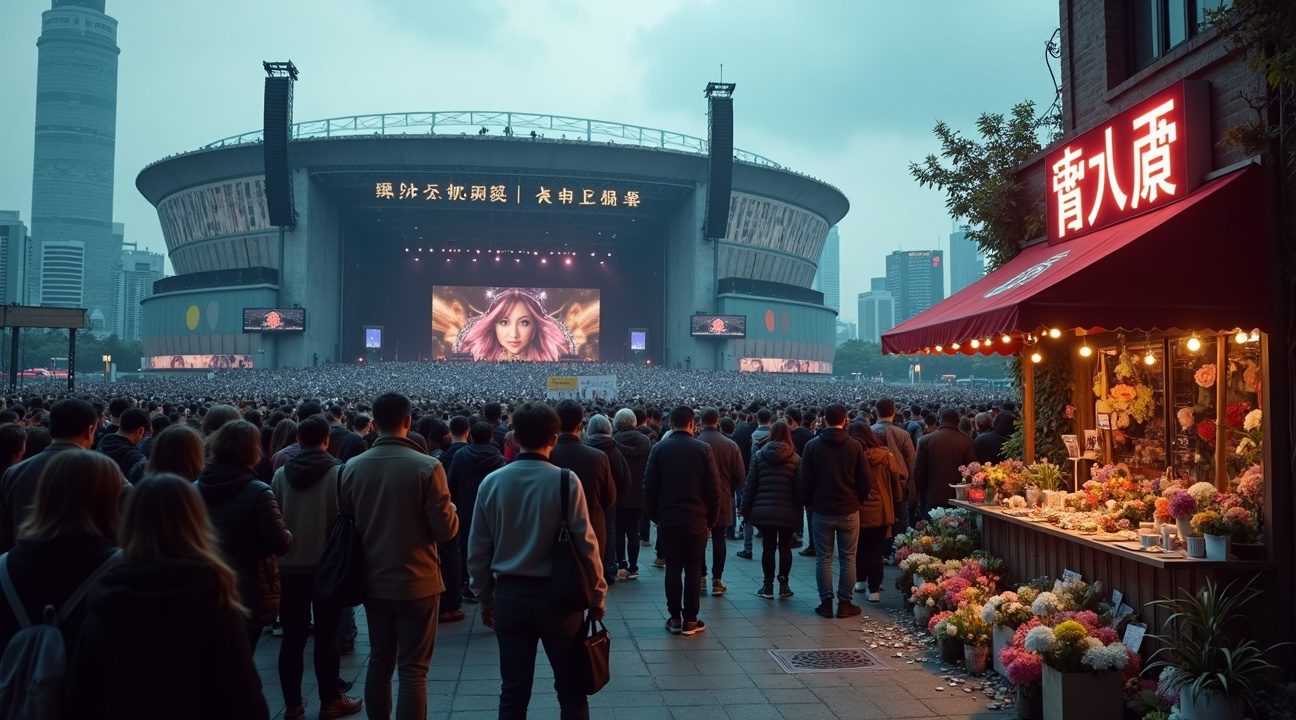
Faced with crushing disappointment, fans found creative ways to channel their emotions and maintain connection with their beloved artist. Many gathered at Hamasaki’s themed café in Shanghai on November 29 – the very day the concert should have taken place. This spontaneous solidarity movement demonstrated the deep bonds within the official fan club and the broader fan community.
Social media platforms became outlets for raw emotion as fans processed the unexpected turn of events. Heart-wrenching statements flooded online spaces, with one particularly poignant comment capturing the collective sentiment: “I want to cry.” These expressions revealed the genuine pain felt by supporters who had invested not just money, but emotional energy and precious time into attending this special event.
The cancellation affected fans differently based on their circumstances. Some had planned elaborate trips, booking flights and accommodations weeks in advance. Others had arranged time off work or adjusted family schedules to attend. International fans faced additional complications with travel arrangements that couldn’t be easily changed or refunded.
Despite the official cancellation notice mentioning force majeure — typically used for unforeseeable circumstances beyond anyone’s control — the lack of specific details left fans speculating about what had gone wrong. This information vacuum only intensified their frustration and sense of loss.
The fan gathering at the Shanghai café became more than just a consolation prize. It transformed into a testament to the enduring power of music to bring people together, even in disappointment. Fans shared stories, offered mutual support, and found comfort in their shared experience. Some brought flowers or handmade gifts they had originally planned to present during the concert, creating an impromptu shrine of devotion.
This spontaneous community response highlighted something remarkable about Hamasaki’s fanbase. Rather than turning their disappointment into anger or giving up entirely, they chose to unite and support one another. The cultural values of respect and collective support shone through their actions.
The financial impact extended beyond ticket refunds. Many fans had invested in exclusive merchandise, special transportation arrangements, and premium hotel bookings. Concert-goers who had traveled internationally faced additional losses from non-refundable travel expenses, making the cancellation especially costly for devoted supporters who had made significant financial commitments.
As news of the cancellation spread across social media and fan networks, messages of support poured in from fellow fans who understood the unique pain of having a long-anticipated concert suddenly pulled away. The emotional investment that fans make in these experiences goes far beyond the ticket price — it represents months of excitement, planning, and anticipation that disappeared overnight.

Hamasaki Demonstrates Cultural Sensitivity Amid Personal and Professional Challenges
I witnessed an extraordinary display of cultural awareness when Hamasaki made profound adjustments to her performance following the Hong Kong fire tragedy on November 27, 2025. The J-pop icon’s response demonstrated the deep respect for mourning protocols that characterizes Japanese culture, even when performing internationally.
Respectful Performance Modifications
Hamasaki’s decision to completely overhaul her stage presentation revealed remarkable artist responsibility. She eliminated all red costumes from her wardrobe, replacing them with black attire as a symbol of mourning for the fire victims. This wasn’t just a surface-level change — she also removed all flame effects from her elaborate stage production, recognizing how insensitive such visuals would appear given the tragic circumstances.
The singer went further by requesting fans avoid wearing red clothing to the venue, extending the mourning gesture to her audience. This collective demonstration of respect transformed what could have been a typical concert experience into something far more meaningful. Her cultural sensitivity bridged the gap between entertainment and genuine human compassion, showing how performers can honor tragedy while still delivering their art.
Acknowledging Unseen Dedication
Beyond the visible changes, Hamasaki expressed deep regret about the impact on her production team. She specifically mentioned her sadness that 200 staff members who had worked tirelessly to prepare the performance couldn’t witness their efforts come to fruition. This acknowledgment highlighted the often-overlooked contributions of behind-the-scenes professionals who make large-scale productions possible.
Her apology extended to the 14,000 fans who had traveled to attend the concert. Hamasaki understood that many had made significant sacrifices — taking time off work, booking flights, arranging accommodations — all to see her perform. The rapid dismantling of the stage meant she couldn’t even meet these devoted supporters personally, adding another layer of disappointment to an already difficult situation.
Despite these challenges, the singer found solace in the overwhelming support she received. She noted feeling “so much love from TAs around the globe,” referring to her dedicated fanbase known as Team Ayu. This global outpouring of understanding and encouragement demonstrated how genuine artist responsibility resonates with audiences, even when they’re disappointed by circumstances beyond anyone’s control.
The incident showcased how professional artists balance entertainment obligations with cultural sensitivity. Hamasaki’s modifications weren’t legally required or contractually mandated — they represented a personal choice to honor those affected by tragedy. Her staff dedication recognition also highlighted the collaborative nature of modern entertainment production, where success depends on countless individuals working behind the scenes.
Fan appreciation became a cornerstone of her response, as she recognized that disappointment didn’t diminish the loyalty of those who had planned to attend. Instead of focusing solely on her own losses — financial, artistic, and emotional — she acknowledged the impact on everyone involved in the production.
This approach to crisis management offers valuable lessons for other performers facing similar challenges. Cultural awareness during difficult times can actually strengthen the bond between artists and their audiences, even when immediate gratification is sacrificed for long-term respect and understanding.
Hamasaki’s response proved that mourning protocols need not completely halt artistic expression. Rather, they can transform it into something more profound and meaningful. Her black-clad performance in an empty arena became a powerful statement about the intersection of entertainment and human dignity, showing how true professionals adapt their craft to serve higher purposes when circumstances demand it.

Economic Devastation Spreads Beyond Entertainment Industry
The shockwaves from Ayumi Hamasaki’s aborted concert extended far beyond the entertainment sector, creating a domino effect that devastated multiple industries across both nations. Within hours of the initial cultural tensions, entire economic sectors found themselves grappling with unprecedented disruptions that would reshape bilateral business relationships for months to come.
Tourism Industry Faces Catastrophic Losses
The tourism sector experienced perhaps the most severe blow from this crisis. Following the government advisory issued on November 14, 2025, Chinese travelers demonstrated swift and decisive action that caught the industry off guard. Approximately 500,000 Chinese tourist bookings to Japan were cancelled within just 48 hours, dramatically reducing total anticipated travel from 1.5 million to 1 million visitors. This massive exodus of bookings left hotels, tour operators, and countless service providers scrambling to manage unprecedented cancellation volumes.
Travel agencies across China worked around the clock to process refund requests while simultaneously dealing with the logistical nightmare of rebooking clients who still wished to travel. Many tourists found themselves forced to seek alternative routes through Hong Kong and Macau, or switch to Japanese carriers such as ANA, often facing double the original travel costs. The ripple effect touched every corner of the travel ecosystem, from small local guides to major international hotel chains.
Aviation Industry Struggles with Mass Cancellations
Chinese airlines bore the brunt of this cultural fallout, recording heavy losses due to widespread flight cancellations to and from Japan. The situation became particularly chaotic when return flights were abruptly cancelled, leaving travelers stranded or forcing them to abandon their trips entirely. Similar to how Japanese spectators clean stadiums after games as a matter of principle, Chinese travelers demonstrated their cultural values through coordinated booking cancellations.
Major carriers found themselves managing not just immediate financial losses but also long-term reputation damage as frustrated customers sought compensation and alternative arrangements. The administrative burden of processing mass cancellations strained airline customer service departments, creating delays that compounded the crisis. Meanwhile, unreleased Japanese films were pulled from Chinese cinemas, while event organizers on both sides reported major financial losses that would impact future cultural exchanges between the two nations.

Future Tour Dates Cast in Doubt as Geopolitical Pressure Mounts
Despite the abrupt closure of her November 29 concert, Hamasaki’s “I Am Ayu Tour” still lists a scheduled performance in Macau for January 10, 2026. However, mounting concerns about her ability to perform anywhere within Greater China’s sphere of influence have sparked intense debate among fans and industry observers.
Online fan communities have expressed growing anxiety about whether the Macau concert will proceed as planned. Social media discussions reveal deep skepticism about the feasibility of any Japanese artist maintaining a consistent touring schedule across Chinese territories given current diplomatic tensions. The uncertainty extends beyond individual performances to questions about the broader viability of Japanese cultural exports in the region.
Political Leverage Through Cultural Restrictions
Industry analysts point to a calculated strategy by Chinese authorities to use entertainment and cultural sanctions as diplomatic tools against Japan. This approach represents a sophisticated form of soft power projection, where artistic performances become pawns in larger geopolitical maneuvering. The selective enforcement of cultural restrictions allows for targeted pressure while maintaining plausible deniability.
China’s entertainment industry has become increasingly restrictive toward foreign performers, particularly those from nations with strained diplomatic relationships. These cultural barriers serve multiple purposes:
- Demonstrating domestic control over foreign influence
- Applying economic pressure on target countries through the entertainment sector
For Japanese artists like Hamasaki, this environment creates an unpredictable landscape where successful careers can face sudden disruption.
The broader implications extend far beyond individual artists or tours. Japanese entertainment companies must now factor political risk into their expansion strategies, potentially limiting opportunities for cultural exchange and artistic collaboration. This shift affects not only established stars but also emerging artists who might have previously looked to Chinese markets for career development.
Several factors contribute to the complexity of this situation. Japanese cultural practices often emphasize respect and professionalism, qualities that can sometimes clash with rapidly changing political expectations in foreign markets. The entertainment industry’s reliance on advance booking and promotional campaigns makes sudden policy shifts particularly damaging.
Safety concerns also weigh heavily on touring decisions. Artists and their management teams must consider not only the likelihood of performance cancellations but also potential security risks associated with performing in politically sensitive environments. The emotional toll on performers who invest significant preparation time only to face last-minute shutdowns adds another layer of complexity to international touring strategies.
The ripple effects of these cultural restrictions extend throughout the entertainment ecosystem:
- Concert venues may experience sudden financial losses
- Promotion companies face difficulties justifying international investments
- Technical crews and support staff endure unstable employment conditions
This instability can lead to reduced investment in international touring infrastructure, creating a cycle that further limits artistic exchange.
Looking ahead, Japanese artists face difficult decisions about maintaining their presence in Chinese markets. Some may choose to temporarily suspend activities until diplomatic relations improve, while others might attempt to navigate the complex political landscape through careful timing and messaging. The success of either approach remains uncertain given the volatile nature of international relations.
Recent events in Japan have further complicated diplomatic relationships, adding additional layers of sensitivity to cultural exchanges. Artists must now consider how domestic Japanese situations might affect their reception in Chinese venues, creating an increasingly complex calculus for international performance planning.
The long-term sustainability of Japanese artists’ careers in Greater China markets remains questionable. Until diplomatic tensions ease or clearer guidelines emerge for international performers, artists like Hamasaki will continue facing uncertainty about their ability to connect with Chinese audiences through live performances. This situation ultimately diminishes opportunities for cultural understanding and artistic collaboration between the two nations.
Sources:
South China Morning Post: “Ayumi Hamasaki’s Shanghai show cancelled as China-Japan rift widens”
Inquirer Entertainment: “Ayumi Hamasaki performs in empty venue after concert was axed”
China Observer (YouTube): “The World Watches China’s Clown Show! Ayumi Hamasaki’s…”
Electric Bloom Web Zine: “Ayumi Hamasaki Shanghai concert cancelled amid tightening restrictions on Japanese artists in China”
Global Times: “Hamasaki’s Shanghai concert canceled amid China-Japan tensions”
Mothership: “Japanese pop star Ayumi Hamasaki performs to empty Shanghai arena after show cancelled in China, wins praise”